
Built for families who feel like they've tried everything.
Someone in your house is holding the whole plan in their head — every appointment, every chore, the thing that has to happen Thursday. FocalNest holds it instead, and keeps holding it through the weeks that fall apart.
Free during the closed beta · one household · see pricing
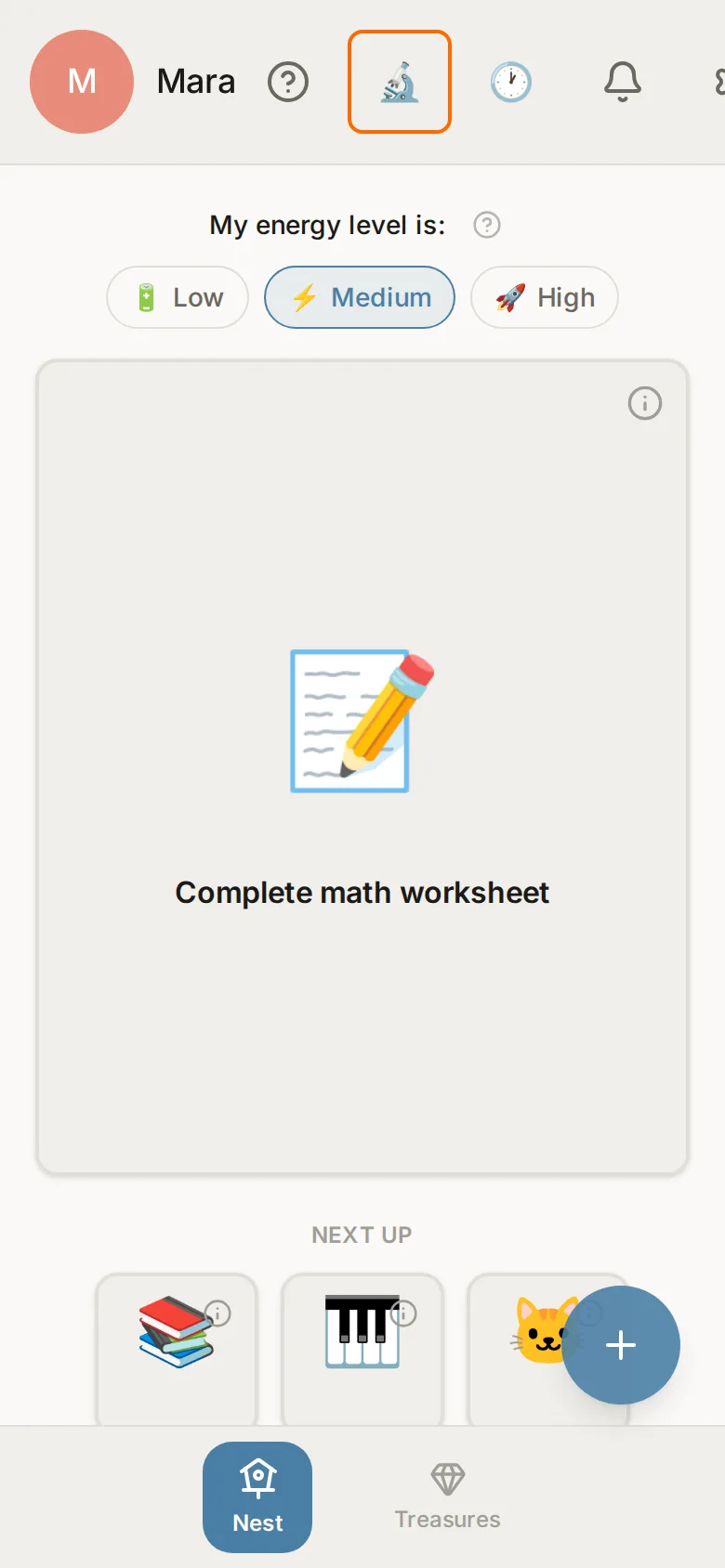
You're the one holding it all together.
In most households one person quietly becomes the system. They remember the permission slip. They know Tuesday is going to be a problem before anyone else does.
In a house with ADHD, that job usually lands on the person whose brain is least suited to carrying it. A to-do list doesn't help, because keeping the list current is the same job all over again.
That's the part FocalNest takes.
The plan keeps itself.
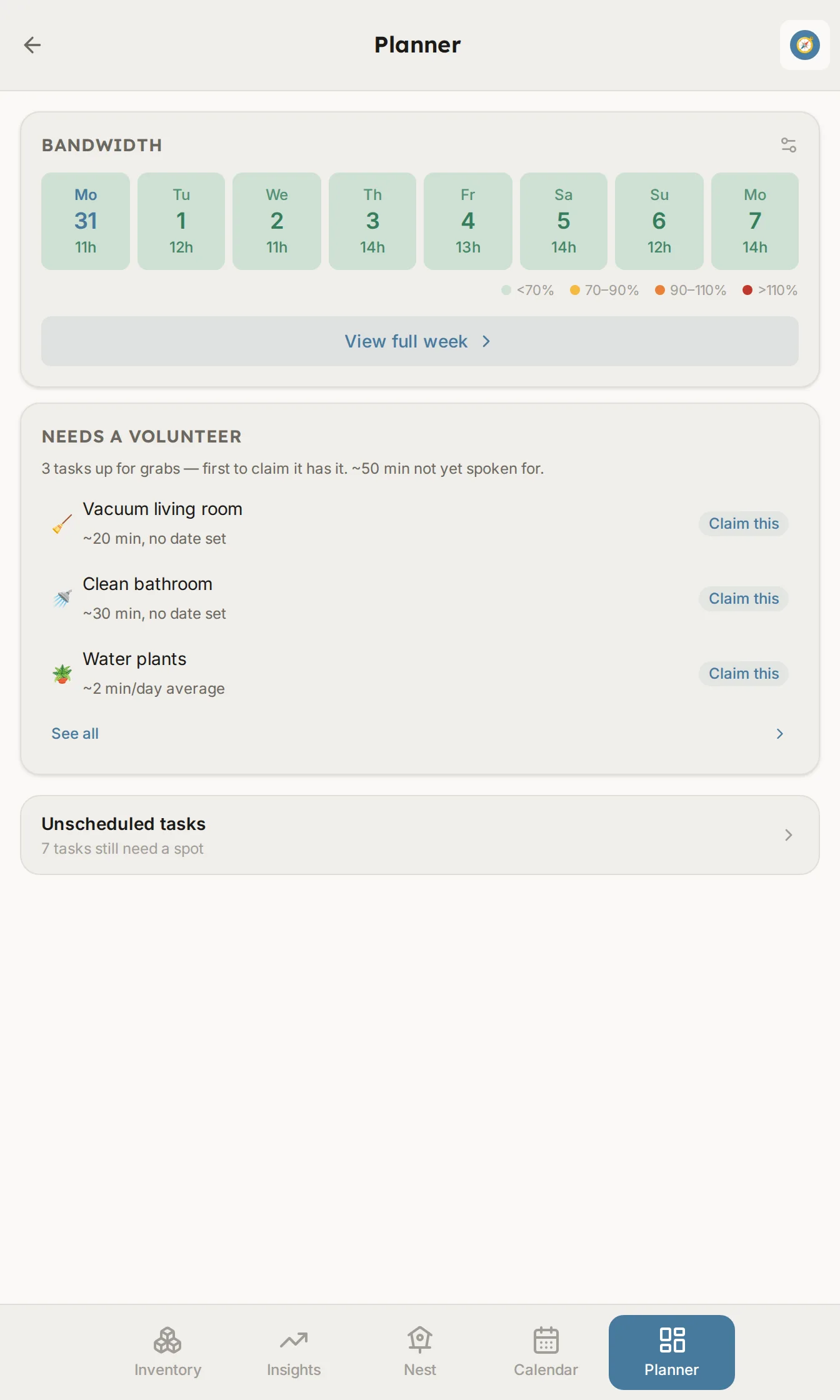
Add a task and FocalNest finds it a place — around school, around work, around whatever is already on your calendar. It re-plans overnight and moves things out of the way when a meeting lands on top of them.
It won't move anything you pinned to a time or marked important. There it suggests, and waits for you to say yes. So the plan is already made when you open the app.
The bus leaves at 8:15am sharp. Please return the signed slip and $6 by Wednesday.
Forward the email. Walk away.
Half of a household's admin arrives by email, while you're in the middle of something else. Reading it isn't the hard part. Acting on it hours later is.
Send it to your own FocalNest address instead. The appointment lands on the calendar, and what you have to do first becomes a task with the real deadline. When both parents forward the same newsletter, it becomes one set of tasks.
What makes it different
A plan that makes itself
Tasks get placed around what's already on the calendar, and re-placed when the day changes. Anything you pinned stays pinned.
The one thing worth doing now
Deciding what's next is its own ADHD tax. FocalNest weighs your deadlines, energy, and workload, then hands you one thing. Reorder whenever you want.
Tasks that bend
“Roughly every few days.” Meds three times, six hours apart. A task model shaped like the life you actually live.
The family screen in the kitchen
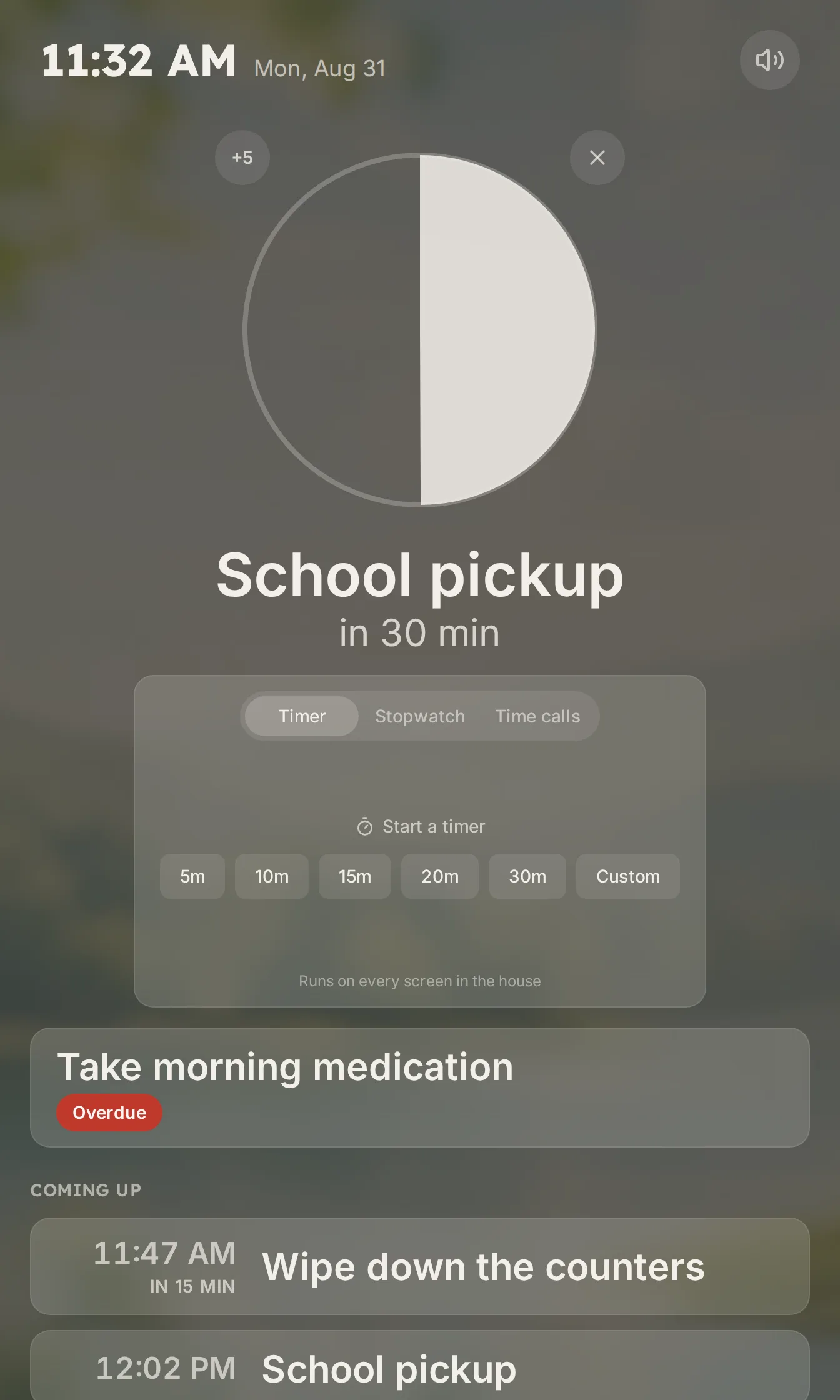
Prop up a spare tablet and it becomes a household display: what's coming, how long until you leave. Quiet until something's close.
Better together
Everyone's tasks in one calm place, so you can see who's stuck and step in with help instead of a reminder.
Treasures worth collecting
Real completions sometimes unlock a card from a curated collection. Nothing to break.
One house. No two brains alike.
A neurodivergent household almost never means everyone. FocalNest's ADHD support comes in four categories you set per person, so the member who just wants a clean shared list gets exactly that.
Time awareness
Countdowns, generous buffers, and ambient “leaving in 40 minutes” cues.
Getting started
A two-minute first step, energy matching, and a gentle nudge past task paralysis.
Focus & attention
A calm focus mode, and an easy way back in after an interruption.
Transitions
A heads-up before a change, and tasks grouped by where you already are.
The interface adapts by age too: adults get the full planning surface, kids get one thing at a time. Some of it reaches past ADHD — the transition warnings and motion controls are what autistic family members reach for first.
Real life doesn't repeat every Tuesday at four.
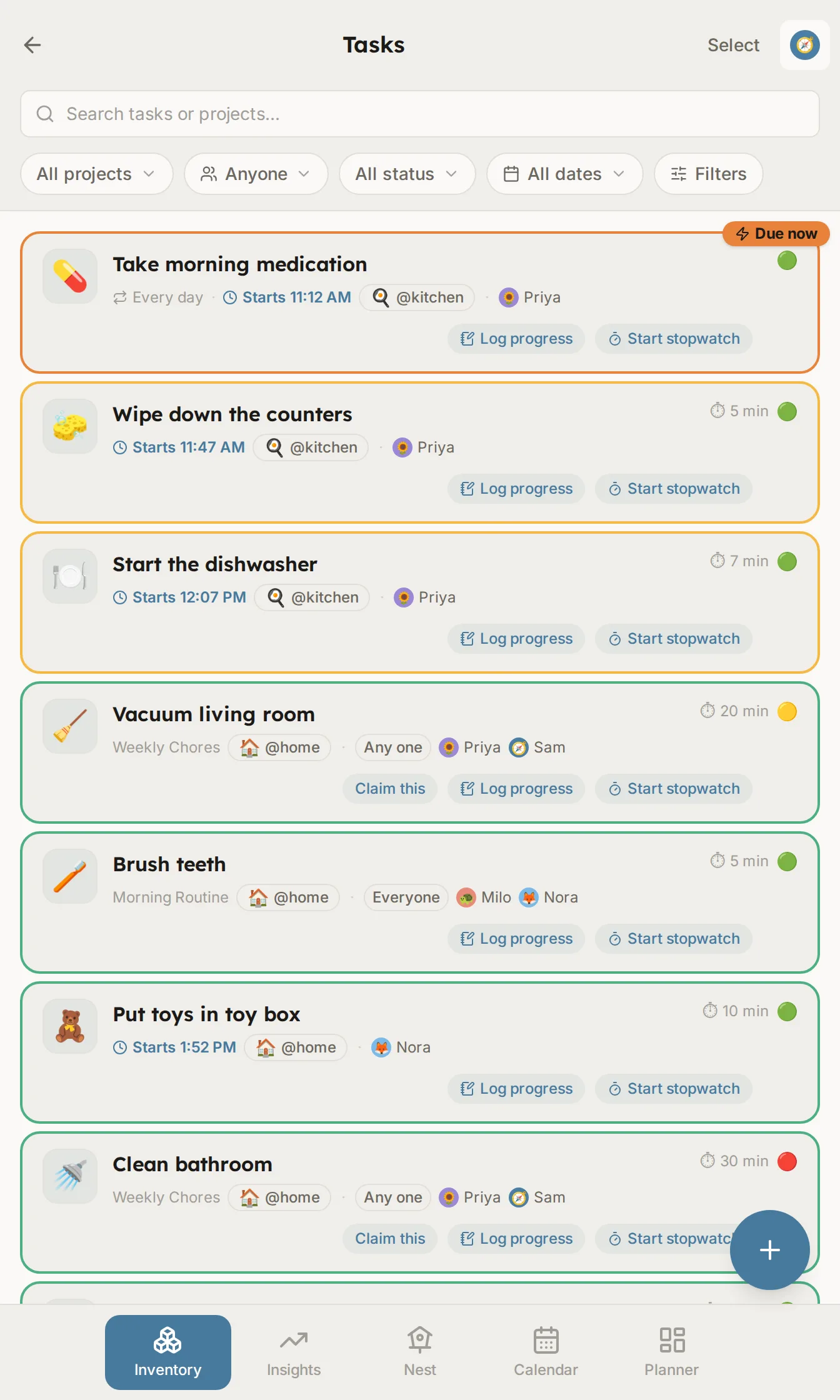
Most task apps assume a tidy schedule. FocalNest handles “roughly every few days,” medication three times six hours apart, a deadline that stays soft until it suddenly isn't.
Deadlines change color as they approach — green, amber, orange, red once it's past. No notification loop, nothing to configure. A parent can read the whole house from across the room.
A bad week costs you nothing.
There is no streak counter anywhere in FocalNest. A streak turns one hard week into something you've broken, and the usual response to breaking something is to quietly stop opening the app.
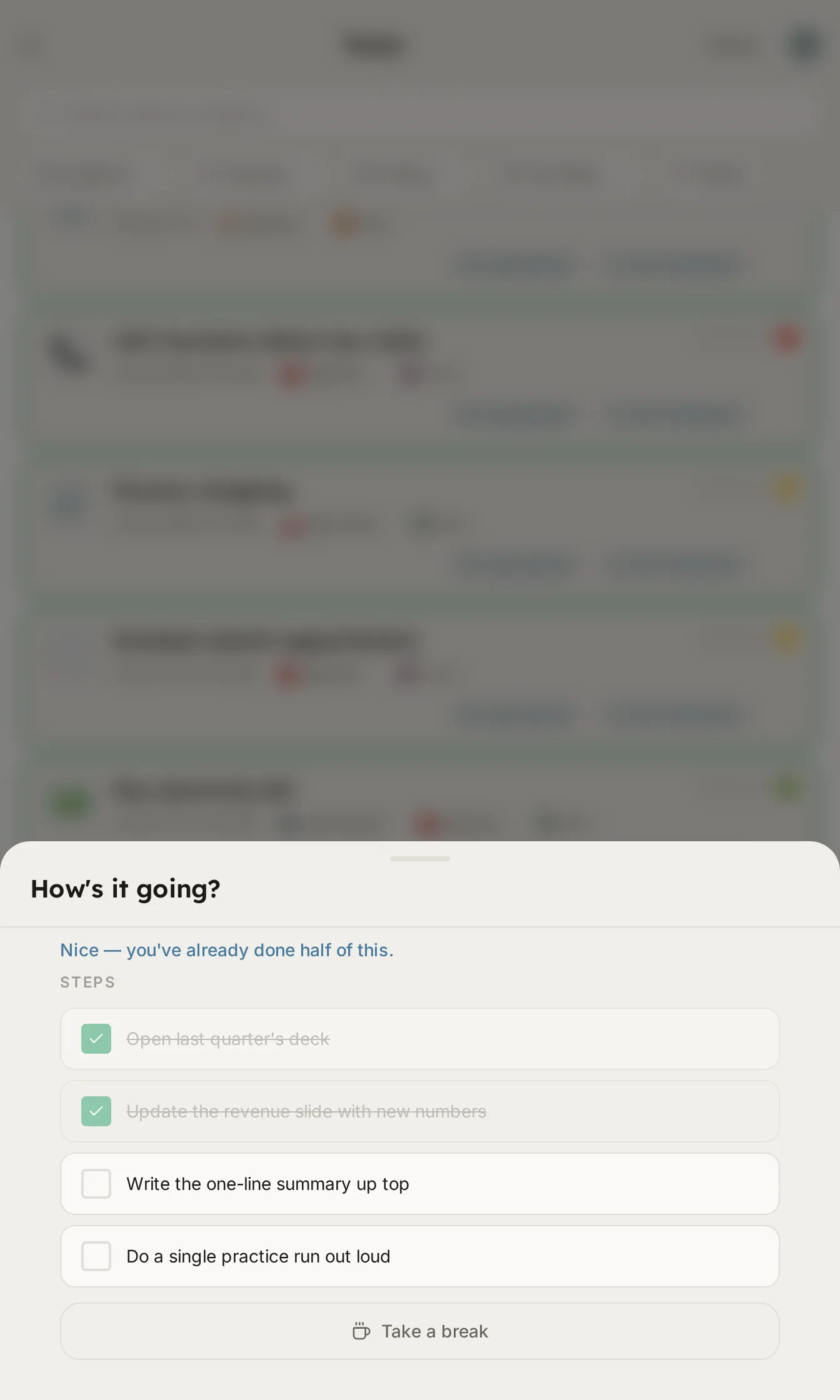
So nothing accumulates against you. A missed routine is simply waiting when you come back, partial progress counts, and the bar never sits at zero. This is the part that decides whether you're still using it in March.

Your kid is still using it in week six.
Reward charts work for about two weeks. Then the novelty wears off and you're back to enforcing it yourself.
Here, finishing something real sometimes unlocks a card from a collection — dinosaurs, bugs, rocks and minerals, each with a fact worth knowing. Sometimes, not every time. That unpredictability is the whole mechanism, and it's what an ADHD brain responds to.
You pick which collections your child draws from, and can add real-world rewards with limits you set.
On the tablet already in your kitchen.
Prop up a spare tablet and FocalNest becomes a family display: what's coming up, and how long until someone needs to leave. Every row is a time and a title, never who owes what, so it can sit in a hallway without putting anyone's day on show.
It runs on hardware you already own, and it's the same app everyone is using on their phones.
Built on the research, not on what demos well.
The principle doing most of the work is externalization: moving what an ADHD brain struggles to hold onto a screen where it stays put. A few places that shows up.
Generous time estimates
ADHD brains underestimate how long things take, so the app plans with a buffer built in.
Your real bandwidth, on screen
The planner maps each day against what it can hold, and flags an overloaded week before you are living in it.
The hardest hours
Late afternoon is when medication wears off and everything gets harder, so the wizard keeps demanding work out of that window.
Reduced motion, respected
Every animation can be switched off — motion should never overwhelm a sensory-sensitive user.
How we build it
Neurodivergent-first
Every decision — color, timing, language — starts from ADHD, autism, and executive function differences rather than accommodating them afterward.
Depth over breadth
We do a small number of things well: task management and family coordination, built properly, rather than a feature list that photographs well and fails in daily use.
No hardware lock-in
Works on the tablets and phones you already own. Serious software should run on ordinary hardware.
Honest pricing
One household price, every feature included. No per-seat fees and no fine print. See pricing →
Stories from real families
We're in closed beta, so we would rather leave this space honest than fill it with invented quotes. Real stories from real households will land here as our first families settle in.
Bring calm to the chaos.
We're in closed beta, reviewing requests as we go. Ask for access and we'll send you a personal invite.