
Devices
One big screen, or four where you actually need them.
A dedicated family display costs three to six hundred dollars, and the screen is the cheap part. You are mostly buying the software that runs on it.
FocalNest is the software, and it runs in a browser. So the same budget buys four second-hand tablets and something to stand them in, which puts a screen in four of the rooms where your household loses time instead of one. Propped on a shelf, not drilled into a wall.
A screen you have to walk to is a screen you don't check.
Support only works where the difficulty happens. A display in the hall does nothing for the twenty minutes that fall apart in the bathroom, and asking someone to go and look at it is asking them to remember the thing it would have reminded them of.
That is the whole case for more, smaller screens. The same few lines, close enough to be read without anyone deciding to go and read them.
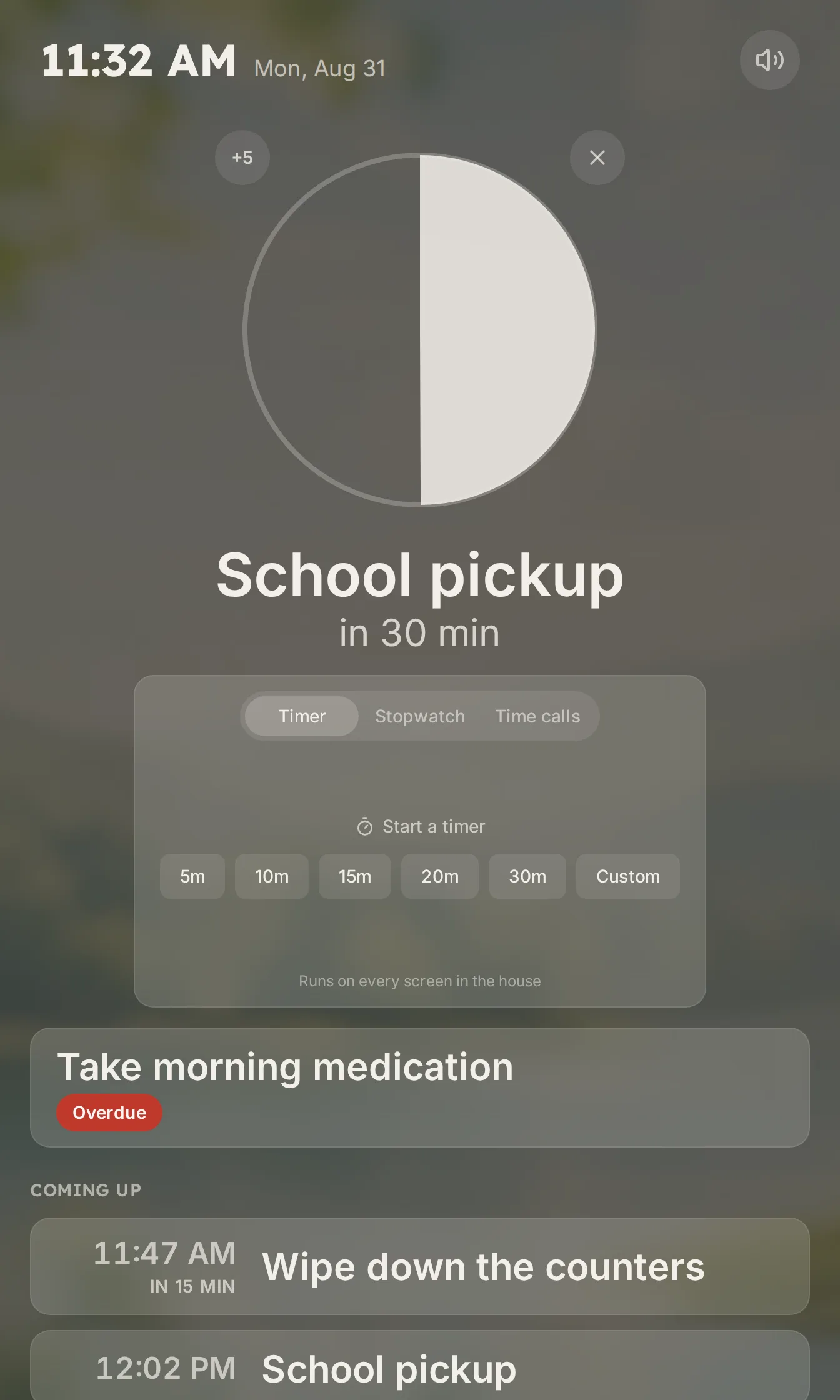
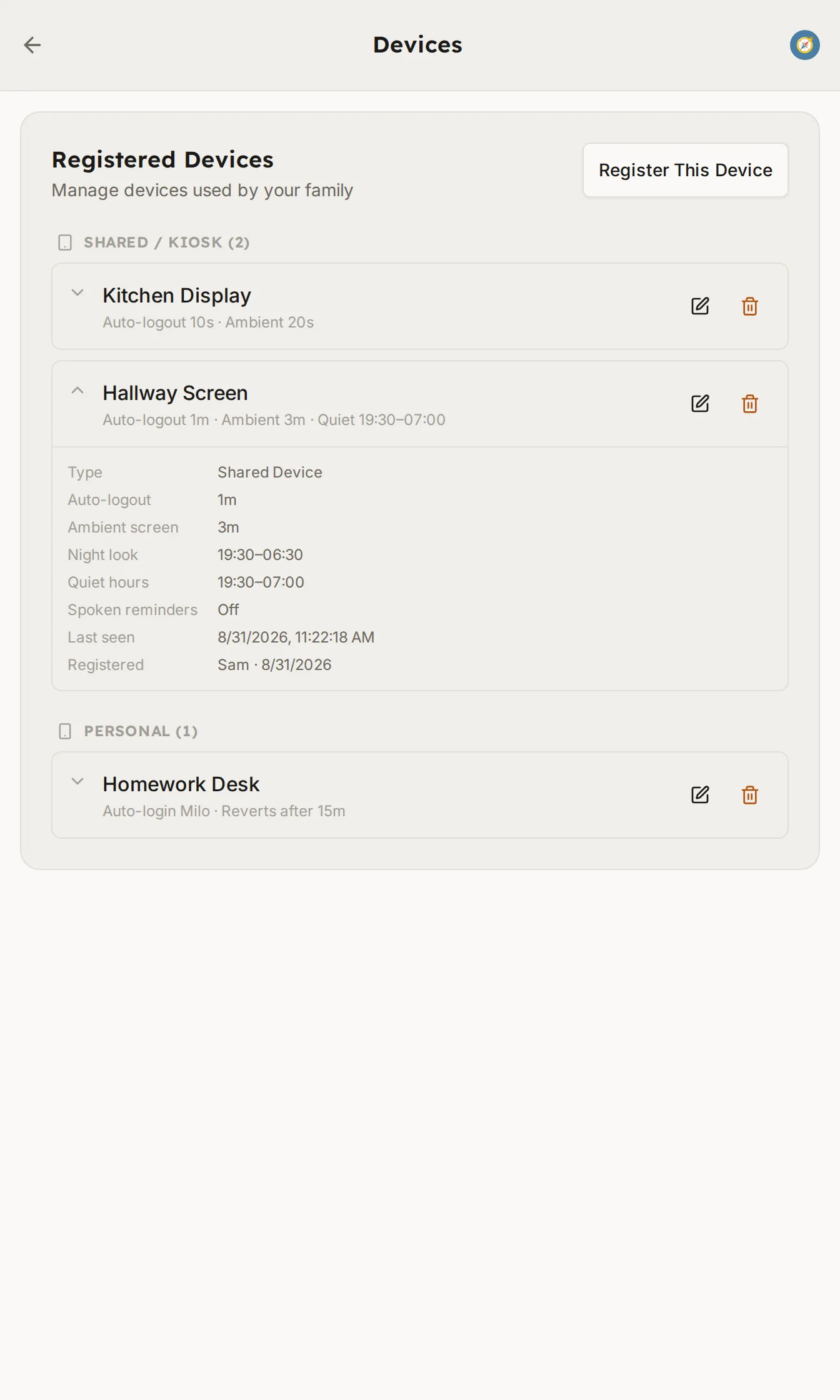
Every screen shows the same thing. They don't all behave the same way.
Each one is set up on the device itself, takes about a minute, and then keeps its own settings:
- When it goes quiet in the evening, and when it wakes up again
- Whether it speaks reminders aloud, or stays silent and just shows them
- How long it waits before it stops showing anyone in particular and goes back to the clock
- Whether it shows the countdown ring to the next thing
Timers are the exception, and deliberately so. Start ten minutes on the kitchen screen and it is counting down in the hallway too, so a child who moves rooms mid-task does not leave the clock behind. Sound stays local to each screen, so the one outside a bedroom can show that countdown and say nothing at all.
Where to put them.
Put a screen where the day already goes wrong, not where it looks tidy.
By the door
The last thirty seconds before leaving, when what gets forgotten is decided. A screen here answers "how long have I got" without anyone asking.
The bathroom
Mornings and bedtime both run through this room, and both are where a timer started somewhere else keeps mattering.
Wherever homework happens
The three-to-eight window is the hardest part of the day in most households with ADHD in them. A screen already showing the time and the next thing removes one more thing to hold onto.
The kitchen
The room everyone passes through. This is usually the first screen, and often the only one a family ever needs.
Power decides this more than price does. Every spot on that list needs an outlet within reach of a cable you are willing to look at, and a shared screen wants to stay plugged in. Work out where the outlets are before you work out which tablet to buy. A stand on the counter is usually the whole job; none of this needs mounting.
Every line on the display is a time and a title, never who owes what. That is what makes a screen in a hallway reasonable.
Start with one.
Buying four tablets and mounting them is a weekend project, and one that stalls half-finished becomes another thing in the house to feel bad about.
Put one screen in the kitchen with whatever you already own and give it two weeks. If your household walks past it and reads it, you know which room deserves the second one, and you learned that for the price of a stand.
We don't sell hardware.
There are no affiliate links on this page or in the guide below, and we earn nothing on anything we suggest. We would rather be wrong in front of you than have a reason to send you toward the more expensive tablet.
Your subscription is the whole of what we charge. It does not go up per screen.